Both approaches have advantages and disadvantages. The right choice depends on factors such as budget, construction time, design preferences, energy efficiency and the requirements of the individual project.
What Is a Modular Home?
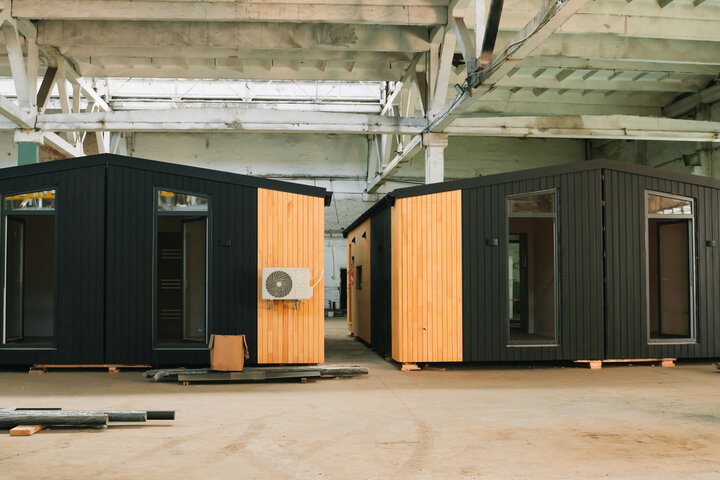
A modular home is constructed using individual sections, or modules, that are manufactured in a controlled factory environment before being transported to the building site.
This approach is at the heart of modern modular building. Instead of completing the entire construction process outdoors, many parts of the home can be manufactured and prepared in advance.
Once the modules arrive at the site, they are assembled to create the finished home. Interior finishes, services and other elements can then be completed according to the design.
What Is a Traditional Home?
A traditional home is generally constructed almost entirely on the building site. Foundations, walls, roof structures, electrical systems, plumbing and interior finishes are installed progressively by different trades.
Traditional construction offers a familiar and highly established approach. It can also provide considerable flexibility when designing a completely bespoke home.
However, because much of the construction takes place outdoors, projects can sometimes be affected by weather, material deliveries and the availability of different trades.
Construction Time
One of the key advantages of modular building is the potential to reduce the overall construction timeline.
While site preparation is taking place, modules can be manufactured simultaneously in a factory. This parallel process can help make construction more efficient and predictable.
Traditional construction generally follows a more sequential process, meaning that delays in one stage can affect the following stages.
The actual timeline for either type of home depends on the design, site conditions, planning requirements and complexity of the project.
Quality and Precision
Factory production can provide a controlled environment for manufacturing modular homes. Materials and components can be measured and assembled using consistent production processes.
Modern modular building can therefore offer a high level of manufacturing precision.
Traditional construction can also achieve excellent quality, particularly when experienced contractors and high-quality materials are used. However, quality can vary depending on the construction team, site conditions and project management.
Modular Steel Construction
Another important factor to consider is the structural system used to create the home.
Modular steel construction is increasingly used for modular buildings because steel provides strength, durability and structural stability. Steel components can be accurately manufactured before being transported and assembled at the final location.
The use of modular steel construction can also support contemporary architectural designs, open-plan interiors and large window openings.
For homeowners looking for a durable and modern construction method, steel can be an attractive structural solution.
Design Flexibility
Traditional homes are often associated with extensive design freedom. Homeowners can work with architects and builders to create highly customised layouts, materials and finishes.
However, modern modular building can also offer significant design flexibility.
Modular homes can be designed in different sizes and configurations, with options for different room layouts, exterior finishes, windows, doors and interior specifications.
The idea that modular homes all look the same is becoming increasingly outdated. Modern modular architecture can range from compact and practical homes to large, contemporary residences.
Energy Efficiency
Energy efficiency is another important consideration when comparing modular and traditional homes.
Because modular homes are manufactured in a controlled environment, insulation and building components can be installed with a high degree of consistency.
A well-designed modular home can incorporate high-quality insulation, energy-efficient windows, modern heating systems and efficient building services.
Traditional homes can also achieve excellent energy performance. Ultimately, energy efficiency depends on the overall design, materials, insulation, windows, heating system and construction quality rather than simply whether a home is modular or traditional.
Cost Considerations
The cost of a home depends on many factors, including its size, location, materials, design and level of specification.
Modular building can potentially reduce certain construction costs through efficient manufacturing and reduced on-site labour requirements.
However, homeowners should consider the complete project cost, including land preparation, foundations, transportation, installation, connections, planning and professional services.
Traditional construction can provide greater familiarity in some markets, but labour, material and project-management costs can vary significantly.
A detailed quotation based on the specific project is therefore essential before making a decision.
Sustainability
Sustainability is becoming increasingly important in residential construction.
Modular building can help reduce material waste because manufacturing takes place in a controlled environment where materials can be measured and managed efficiently.
Modular steel construction can also offer long-term durability, while steel has the advantage of being highly recyclable.
Traditional construction can also incorporate sustainable materials and energy-efficient technologies. The environmental performance of a home depends on its entire lifecycle, including materials, energy consumption, transportation and future adaptability.
Which Option Is Right for You?
There is no single answer for every homeowner.
A modular home may be a good choice for someone who values efficient construction, predictable manufacturing, modern design and flexible building solutions.
A traditional home may be preferable for homeowners who want a highly customised on-site construction process or have a particularly complex site.
The best approach is to compare the complete project requirements rather than focusing only on the construction method.
The Future of Home Construction
As demand grows for faster, flexible and more efficient housing solutions, modular building is likely to become an increasingly important part of the construction industry.
Advances in modular steel construction, insulation, manufacturing technology and architectural design are helping modular homes become more sophisticated and adaptable.
Rather than replacing traditional construction completely, modular building is creating another option for homeowners looking for modern ways to build high-quality homes.
Conclusion
Manufacturing in a controlled production environment offers clear advantages when building modular homes. Materials and components can be manufactured precisely using standardized production processes and carefully inspected throughout the process. This helps maintain consistent quality standards and allows potential errors to be identified and addressed at an early stage.
Especially with modular steel construction, precise manufacturing enables high dimensional accuracy and a stable, durable structure. At the same time, modern insulation materials, windows, installations and other building components can be efficiently integrated under controlled conditions.
Compared with traditional home construction, where many steps take place directly on the building site, factory production provides greater control over the construction process. This can contribute to reliable installation and consistent quality across individual modules.