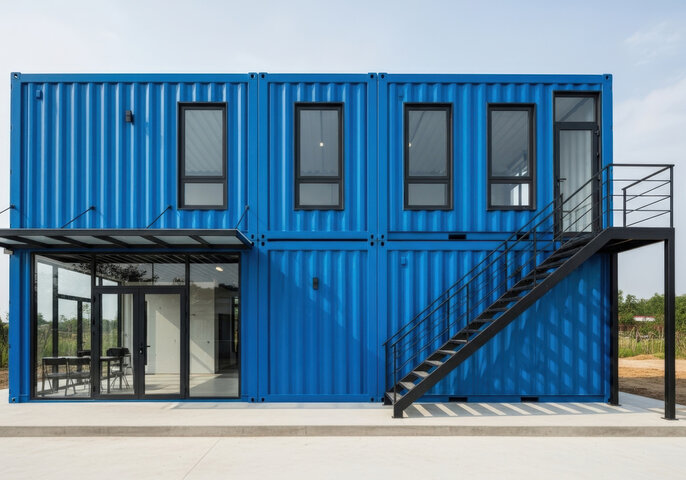
Modular building offers a flexible alternative. Designed and manufactured using modern construction techniques, modular buildings can provide businesses with additional space while allowing them to respond more easily to changing requirements.
One particularly practical solution is the modular office pod, which can provide dedicated workspace for employees, managers, remote workers, or visiting teams.
What Is Modular Building?
Modular building is a construction method in which building sections or modules are manufactured in a controlled factory environment before being transported to the final site.
Depending on the project, modules can include walls, floors, ceilings, windows, doors, electrical systems, insulation, heating, ventilation, and interior finishes.
Once delivered, the modules are installed and connected on-site to create the completed building.
This approach can reduce the amount of construction work required at the business premises and can allow factory manufacturing and site preparation to happen simultaneously.
Why Growing Companies Need Flexible Workspace
Business requirements rarely stay the same.
A company may start with a small team and gradually require additional workstations, private offices, meeting rooms, or specialist facilities.
Traditional expansion can sometimes require significant investment and disruption. A business may even have to relocate simply because its existing premises cannot provide enough space.
A modular building can provide another option by creating additional workspace without necessarily requiring the company to move.
This flexibility can be particularly useful for businesses experiencing rapid growth or uncertain future space requirements.
The Benefits of a Modular Office Pod
A modular office pod is a compact, self-contained workspace that can be used within a larger facility or as a separate office solution.
It can be designed for a variety of purposes, including:
- Private employee offices
- Management offices
- Meeting rooms
- Video conference rooms
- Quiet workspaces
- Home-office extensions
- Consultation rooms
- Creative workspaces
For companies that need additional private space without constructing an entire office building, an office pod can be a practical solution.
Faster Expansion
One of the main advantages of modular building is the potential to shorten project timelines.
Because modules are manufactured away from the final site, production can take place while groundwork and site preparation are being completed.
Once the site is ready, the completed modules can be delivered and installed.
This parallel approach can help businesses gain access to additional workspace sooner than with some traditional construction methods.
Minimising Disruption to Business Operations
Construction at an active workplace can affect employees, customers, deliveries, and daily operations.
With modular construction, much of the manufacturing takes place away from the existing business premises.
The on-site installation process can therefore be more focused and organised.
For a growing company, this can mean expanding its workspace while continuing normal operations with less disruption.
Flexible Office Design
A modern modular office pod does not have to be a basic or temporary-looking structure.
Office pods can be designed with modern finishes and workplace features such as:
- Glazed doors
- Large windows
- Insulated walls
- Efficient lighting
- Heating and cooling
- Ventilation
- Acoustic solutions
- Data connections
- Electrical outlets
- Ergonomic workspaces
The interior can be designed around the specific purpose of the space.
For example, a meeting pod may require different features from a private office or quiet workspace.
Supporting Hybrid and Remote Work
The rise of hybrid working has changed how businesses think about office space.
Companies may no longer need every employee to have a permanent desk. Instead, they may require flexible workspaces, collaboration areas, private meeting rooms, and quiet spaces for focused work.
A modular office pod can provide an adaptable solution.
A company could use several pods for different purposes, creating a flexible workplace that supports both office-based and hybrid employees.
Modular Building for Different Business Needs
Modular buildings can be used by businesses across many industries.
Potential applications include:
- Corporate offices
- Construction companies
- Manufacturing facilities
- Logistics businesses
- Technology companies
- Healthcare organisations
- Educational facilities
- Retail businesses
- Professional services
- Industrial sites
The design can be adapted to suit the operational requirements of each business.
Creating Additional Meeting Space
As companies grow, the demand for meeting rooms often increases.
A lack of private meeting space can make it difficult to conduct client meetings, team discussions, interviews, and video conferences.
A modular office pod can be configured specifically as a meeting or conference room.
This provides a dedicated space without requiring a major internal redesign of the existing office.
Modular Offices for Employee Wellbeing
The workplace environment can influence employee comfort and productivity.
Modular office spaces can be designed to provide natural light, comfortable temperatures, good ventilation, acoustic privacy, and ergonomic furniture layouts.
Businesses can also consider adding dedicated wellness facilities to their modular development.
For example, a company could combine office space with a fitness area, relaxation room, or other employee wellbeing facilities.
Energy-Efficient Modular Buildings
Energy efficiency is an important consideration for modern businesses.
A modular building can incorporate insulation, energy-efficient windows, LED lighting, efficient heating and cooling systems, and modern ventilation.
These features can help create a comfortable workplace while supporting efforts to reduce energy consumption.
Businesses can also consider renewable energy technologies, such as solar panels, depending on the building design and site.
A Scalable Solution for Business Growth
One of the biggest advantages of modular construction is flexibility.
A company may initially require only one or two additional offices but could need significantly more space in the future.
A modular approach can allow businesses to plan expansion in stages.
Additional modules may be added as the workforce grows, subject to site conditions, planning requirements, and the design of the original project.
This can help companies avoid investing in more space than they currently need.
Modular Building for Temporary or Permanent Use
Modular construction can be suitable for both temporary and long-term applications.
A company may need additional office space during a refurbishment, relocation, construction project, or period of rapid growth.
In other cases, a business may require a permanent modular office facility.
The construction method can be adapted to different project requirements, making modular buildings a versatile option for businesses.
Planning a Modular Office Project
Before investing in a modular office pod or larger modular building, businesses should consider several factors.
These include:
- Available site space
- Number of employees
- Required floor area
- Office layout
- Meeting room requirements
- Planning permissions
- Building regulations
- Utilities
- IT infrastructure
- Accessibility
- Heating and ventilation
- Budget
- Installation requirements
- Future expansion
Careful planning can help ensure that the final workspace meets both current and future business needs.
The Future of Flexible Business Space
Businesses are becoming increasingly flexible in how they operate.
Hybrid working, changing workforce sizes, new technologies, and evolving business models are creating demand for workplaces that can adapt.
Modular building provides a way to create additional business space without relying entirely on traditional construction methods.
At a smaller scale, the modular office pod provides a convenient way to introduce private workspaces, meeting rooms, or specialist areas.
Together, these solutions can help businesses create workplaces that are flexible, scalable, and prepared for future growth.
Conclusion
Growing companies need workspace that can grow with them.
Modular building provides a flexible approach to business expansion, offering opportunities for efficient construction, adaptable design, and phased growth.
For companies that need smaller dedicated spaces, a modular office pod can provide a practical solution for private offices, meeting rooms, hybrid working, and employee-focused spaces.
Whether a business needs a single office pod or a complete modular office development, modular construction can provide a flexible foundation for creating the workplace of the future.