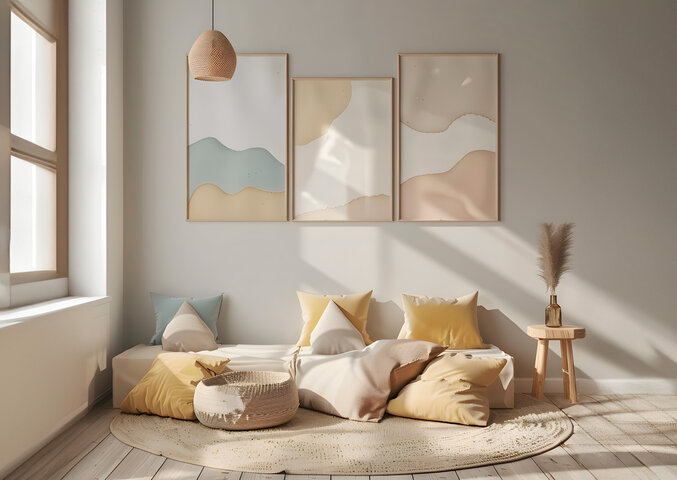
1. Choose an Open-Plan Layout
Open-plan interiors are particularly effective in modern modular homes. Combining the kitchen, dining area, and living room into one connected space can make the home feel larger and more spacious.
An open layout can also improve natural light and create better connections between different areas of the home.
Furniture can be used to define individual zones without creating unnecessary walls. For example, a sofa can separate the living area from the dining space, while a kitchen island can provide a visual boundary between the kitchen and the rest of the room.
2. Use Natural Materials
Natural materials can add warmth and character to a modern modular home.
Wood flooring, timber furniture, stone surfaces, natural textiles, and plants can create a comfortable contrast with clean architectural lines.
A neutral palette combined with natural textures can also help create a timeless interior that remains visually appealing as design trends change.
3. Make the Most of Natural Light
Natural light can have a significant impact on how an interior feels.
Large windows, glazed doors, skylights, and carefully positioned openings can help bring more daylight into modular homes. Light-coloured walls and reflective surfaces can further enhance the sense of brightness.
When planning furniture, avoid placing large items directly in front of windows where possible. Keeping key sightlines open can make rooms feel brighter and more spacious.
4. Add Smart Storage Solutions
Storage is essential in any home, particularly when working with a compact floor plan.
Built-in wardrobes, under-stair storage, multifunctional furniture, wall-mounted shelving, and integrated kitchen storage can help keep the interior organised.
In a modular home, storage can be considered during the initial design stage. This allows storage solutions to be integrated into the layout rather than added later.
5. Create a Flexible Living Space
Modern homeowners often need rooms that can serve multiple purposes.
A spare bedroom can double as a home office, while a dining area can become a workspace during the day. Sliding doors, movable furniture, and modular storage systems can make these transformations easier.
Flexible interiors are particularly useful for homeowners whose needs may change over time.
6. Keep the Colour Scheme Simple
A carefully selected colour palette can make a modular interior feel cohesive.
Soft neutrals such as white, beige, grey, and warm natural tones can create a calm foundation. Stronger colours can then be introduced through furniture, artwork, rugs, cushions, or decorative accessories.
Using a consistent colour scheme throughout connected spaces can also create a stronger sense of continuity.
7. Use Lighting as a Design Feature
Lighting should be considered both for functionality and atmosphere.
A combination of ceiling lighting, pendant lights, wall lights, floor lamps, and task lighting can create different moods and make individual areas more useful.
Pendant lighting above a kitchen island or dining table can become a visual focal point, while concealed LED lighting can provide subtle illumination in kitchens, wardrobes, or shelving.
8. Bring Nature Indoors
Indoor plants can add colour, texture, and life to a modern modular home.
Large plants can work well in living areas, while smaller plants can be placed on shelves, kitchen counters, or windowsills.
Natural materials and greenery can help soften minimalist interiors and create a more relaxed atmosphere.
9. Focus on Multifunctional Furniture
Multifunctional furniture can make better use of available space.
Examples include:
- Sofa beds
- Extendable dining tables
- Storage benches
- Folding desks
- Ottomans with hidden storage
- Built-in seating
These solutions are particularly useful in smaller modular homes where every square metre needs to be used efficiently.
10. Create a Modern but Personal Interior
A modern modular home does not need to look identical to every other contemporary property.
Personal touches can make the interior feel unique. Artwork, photographs, books, textiles, furniture, and decorative objects can reflect the homeowner's personality.
The best interiors combine practical design with elements that make the space feel personal and lived-in.
Conclusion
Modern modular homes offer exciting opportunities for interior design. Open-plan layouts, natural materials, smart storage, flexible furniture, thoughtful lighting, and personal details can transform a modular home into a comfortable and stylish living environment.
Because many interior elements can be considered during the design and manufacturing process, homeowners can plan their interiors from the beginning rather than treating decoration as a separate stage.
With the right approach, a modular home can combine modern aesthetics, practical functionality, and a highly personalised living experience.
Modular steel construction provides a strong, durable, and flexible foundation for modern modular homes, allowing designers to create efficient interiors while supporting adaptable building layouts.