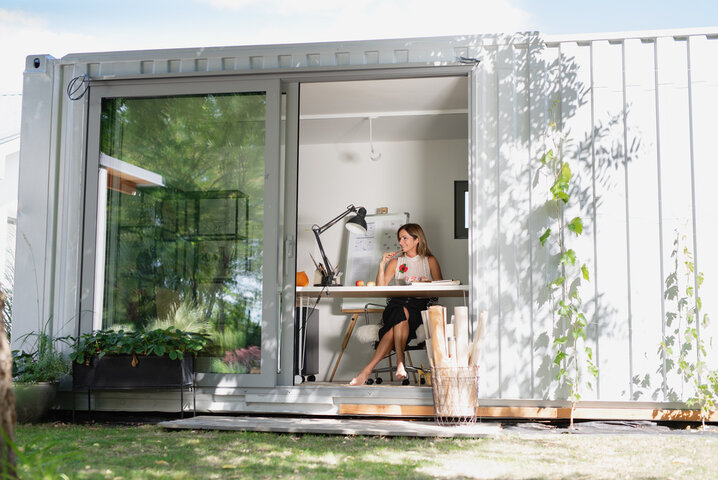
From commercial workspaces to private garden office cabins, modular construction provides opportunities to reduce environmental impact while improving comfort, functionality, and long-term adaptability.
What Is Sustainable Modular Office Design?
Sustainable modular office design combines environmentally responsible building practices with prefabricated construction techniques. Instead of constructing an entire office building on-site, individual modules are manufactured in a controlled factory environment and transported to their final location for installation.
This approach can reduce material waste, improve construction efficiency, and limit disruption at the building site.
A modern modular office can also incorporate renewable materials, advanced insulation, energy-efficient windows, and smart heating systems to support environmental performance.
Whether designed for a growing company or a home-based professional, modular offices offer a flexible solution that can adapt to changing workspace requirements.
1. Reduced Construction Waste and Environmental Impact
One of the most important advantages of modular construction is its potential to minimize waste.
Traditional building projects often generate significant amounts of unused materials due to inaccurate measurements, weather exposure, and changing site conditions.
Modular construction takes place primarily in a controlled manufacturing environment, allowing materials to be measured, cut, and managed more efficiently.
This process can provide several environmental benefits:
- Reduced material waste during manufacturing
- Better opportunities for recycling and material reuse
- Fewer construction activities at the installation site
- Potential reductions in transportation and construction-related emissions
- More efficient use of building resources
Choosing a modular office built with responsibly sourced materials can further improve the sustainability of the workspace.
2. Energy Efficiency for Lower Operating Costs
Energy efficiency is a central consideration in sustainable office design.
A well-designed modular building can incorporate modern technologies that help maintain comfortable indoor temperatures while reducing energy consumption.
Important energy-efficient features include:
- High-performance thermal insulation
- Double- or triple-glazed windows
- Energy-efficient LED lighting
- Smart heating and cooling systems
- Natural ventilation solutions
- Solar panel compatibility
For remote workers, garden office cabins with effective insulation can provide comfortable working conditions throughout the year.
Reducing heating and cooling requirements can also help lower monthly operating expenses.
However, actual energy savings depend on building specifications, local climate, installation quality, and usage patterns.
3. Garden Office Cabins: Sustainable Workspaces Close to Home
Remote and hybrid working have increased interest in dedicated workspaces outside the main home.
Garden office cabins offer a convenient way to create a professional working environment without converting an existing bedroom or extending the main house.
These standalone structures can be positioned in a garden or outdoor space, providing privacy and separation between professional and personal activities.
Benefits of Garden Office Cabins
Improved work-life balance: A separate workspace creates a clear boundary between work and home life.
Natural surroundings: Garden views and access to daylight can create a pleasant working environment.
Flexible installation: Prefabricated cabins can often be installed more quickly than conventional extensions, depending on site preparation and local requirements.
Energy-efficient design: Quality insulation, efficient glazing, and suitable heating systems can support year-round use.
Versatile functionality: A garden cabin can serve as an office, creative studio, meeting room, or multifunctional workspace.
By choosing responsibly sourced materials and energy-efficient designs, homeowners can make their garden office cabins more environmentally responsible.
4. Flexible and Adaptable Office Spaces
Sustainable building design is not only about reducing energy consumption. It also involves creating structures that remain useful over time.
A modular office can be designed with flexibility in mind, allowing organizations to adapt their workspace as operational requirements change.
Depending on the modular system, businesses may be able to:
- Add additional office modules
- Reconfigure interior layouts
- Create dedicated meeting or collaboration areas
- Relocate suitable modular units
- Repurpose buildings for different functions
This adaptability can extend the useful life of a building and reduce the need for unnecessary demolition or complete reconstruction.
For smaller companies and independent professionals, modular construction also provides an opportunity to start with a compact workspace and expand when required.
5. Sustainable Materials for Modular Buildings
Material selection plays an important role in the environmental impact of any building.
Sustainable modular office projects may incorporate responsibly sourced timber, recycled steel, low-emission interior finishes, and durable building components.
Common Sustainable Material Choices
Responsibly sourced timber: Certified timber can support responsible forest management and offer a renewable building material.
Recycled steel: Steel containing recycled material can reduce demand for newly extracted raw materials.
Environmentally conscious insulation: Suitable insulation products can improve thermal performance while meeting environmental and safety requirements.
Low-VOC paints and finishes: Products with low volatile organic compound emissions can contribute to healthier indoor air quality.
Durable cladding materials: Long-lasting exterior finishes can reduce maintenance and replacement needs.
When selecting materials for a modular office, considering durability, embodied carbon, maintenance, and end-of-life recyclability helps support better environmental decisions.
6. Natural Light and Healthy Workspace Design
A sustainable office should support both environmental goals and employee well-being.
Natural lighting, ventilation, acoustic comfort, and ergonomic interiors all contribute to a productive working environment.
Modular buildings can be designed with large windows, thoughtfully positioned doors, and efficient interior layouts that make the most of available space.
For garden office cabins, positioning windows to capture natural daylight while controlling summer overheating can improve indoor comfort.
Additional features such as adjustable lighting, suitable ventilation, and acoustic insulation can make the workspace more comfortable for everyday use.
A well-planned office combines sustainability with practical design choices that support concentration and creativity.
7. Faster Construction and Reduced Site Disruption
Modular construction often offers a more efficient project timeline than traditional building methods.
Because many components are manufactured off-site, certain activities can take place simultaneously, including factory production and groundwork preparation.
This can reduce the overall construction period and limit disruption to surrounding areas.
For residential properties, prefabricated garden office cabins can be especially convenient because much of the manufacturing work is completed before delivery.
Nevertheless, installation schedules depend on several factors, including ground conditions, access, utility connections, weather, and local building regulations.
8. Long-Term Value of Sustainable Modular Offices
A sustainable modular office can provide practical benefits over its operational life.
Energy-efficient features may help reduce utility costs, while durable materials can limit maintenance requirements.
Flexible layouts and potential relocation options can also make modular buildings attractive for businesses facing changing space requirements.
For homeowners, garden office cabins can provide dedicated professional space while preserving the functionality of the main house.
The overall financial and environmental value depends on initial construction costs, energy performance, maintenance, building lifespan, and future use.
How to Choose the Right Sustainable Modular Office
Before investing in a modular workspace, it is important to consider several design and construction factors.
Start by identifying the required floor area, intended use, available location, and budget.
Next, evaluate insulation performance, glazing, ventilation, heating, and material specifications.
It is also important to check planning permissions, building regulations, site access, and utility connections before installation.
For garden office cabins, homeowners should consider year-round comfort, privacy, natural lighting, and the relationship between the building and the surrounding landscape.
Working with an experienced modular building provider can help ensure that the finished workspace meets practical requirements and sustainability goals.
Conclusion: Building a More Sustainable Future with Modular Offices
Sustainable office design is increasingly important for businesses and individuals seeking efficient, flexible, and environmentally responsible workspaces.
A well-designed modular office can combine reduced construction waste, improved energy efficiency, sustainable materials, and adaptable layouts.
Similarly, modern garden office cabins provide an attractive solution for remote professionals who want a dedicated workspace close to home.
By prioritizing thoughtful design, quality construction, and long-term performance, modular buildings can support a more sustainable approach to modern working environments.