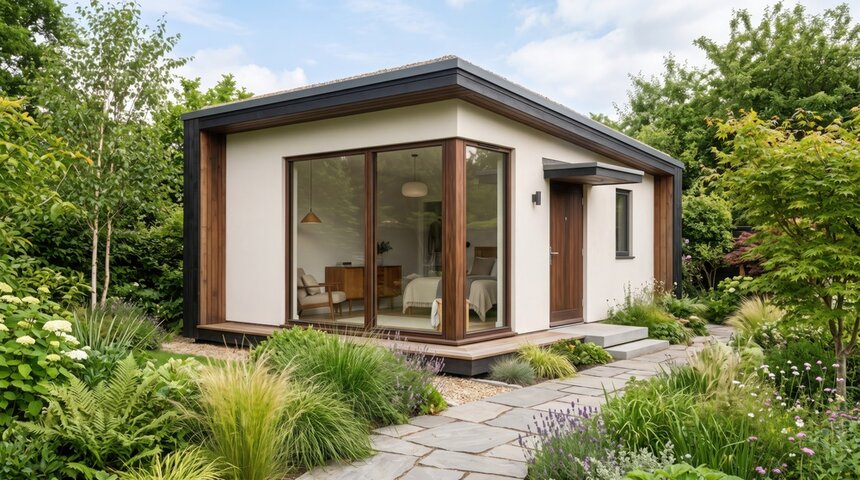
One of the most significant changes is the introduction of an exemption for certain detached auxiliary habitable dwellings in the rear garden of a principal home. Subject to specific conditions, these dwellings can range from 32 m² to 45 m².
For homeowners considering additional accommodation, the new rules could create opportunities for modern modular building solutions, including professionally designed garden accommodation.
New Garden Dwelling Exemption
Under the new regulations, certain detached auxiliary habitable dwellings can be constructed in the rear garden of an existing home without requiring a conventional planning application, provided the relevant exemption conditions are met.
This could provide families with additional options for accommodating relatives, creating independent living space or adapting their homes to changing needs.
A garden pod can be one potential approach to creating additional space within a residential garden. Depending on its design and intended use, a garden pod can provide anything from a dedicated workspace to more substantial accommodation.
However, homeowners should carefully check whether their proposed development meets all the conditions of the new exemption.
Modular Building Solutions for Irish Homes
The changes are particularly relevant to the growing interest in modular building in Ireland.
Modular construction allows buildings or individual components to be manufactured in a controlled environment before being transported and installed at their final location. This can provide an efficient and flexible approach to creating additional space.
For homeowners with suitable gardens, modular solutions can potentially provide a faster and more controlled alternative to conventional on-site construction.
A modern modular building can be designed around specific requirements, including living accommodation, home offices, studios and other residential uses.
Garden Pods and Additional Living Space
The concept of a garden pod has become increasingly popular as homeowners look for ways to make better use of available outdoor space.
A garden pod can create a dedicated area separate from the main house, making it suitable for uses such as:
- Home offices
- Guest accommodation
- Family living space
- Creative studios
- Wellness areas
- Hobby rooms
Where a garden pod is intended to be used as habitable accommodation, however, additional technical and regulatory requirements may apply.
The new planning exemptions therefore create an important opportunity, but homeowners should understand that exemption from planning permission does not mean exemption from other building requirements.
The Role of Modular Steel Construction
Modern modular buildings can also benefit from modular steel construction, which provides a strong and durable structural framework.
Steel construction is particularly suited to modular building because structural components can be accurately manufactured before being assembled into the finished building. This approach can support modern architectural designs while providing long-term structural performance.
For a modular garden dwelling, combining a carefully designed structure with high-quality insulation, windows, doors and building systems can create a comfortable space suitable for year-round use.
Planning Permission and Building Regulations Are Different
One of the most important points for homeowners is that a planning exemption does not remove the need to comply with other regulations.
Building Regulations, Building Control requirements and Fire Safety requirements continue to apply where relevant, particularly when a structure is intended to function as a habitable dwelling.
Homeowners considering a modular building, garden pod or auxiliary dwelling should therefore assess the entire project before construction begins.
What Homeowners Should Check
Before investing in a garden pod or modular building, homeowners should consider:
- Whether the proposed development qualifies for the planning exemption
- The size and layout of the garden
- The location of the proposed building
- Boundary and height requirements
- Access to the property
- Water, drainage and other services
- Building Regulations
- Fire safety requirements
- The intended use of the building
Professional advice can help homeowners understand how the regulations apply to their specific property.
A Potential New Opportunity for Modular Construction
The introduction of the new exemptions could be significant for Ireland's modular construction sector.
For homeowners who meet the relevant conditions, a modular building could provide a practical way to create additional space, while a garden pod can offer a flexible solution for work, leisure or accommodation.
With modern steel construction, modular buildings can combine structural strength with contemporary design and efficient manufacturing.
The new regulations therefore represent an important development for homeowners considering how best to use their existing residential space.
Ireland's new residential planning exemptions provide homeowners with greater flexibility to adapt their properties and, in certain circumstances, create additional accommodation in their gardens.
The new 32–45 m² auxiliary dwelling exemption could be particularly relevant to homeowners exploring modular construction and garden accommodation.
Whether the requirement is a modular building, a garden pod, or a larger auxiliary dwelling, careful consideration of the planning conditions and Building Regulations remains essential.
As Ireland's housing needs continue to evolve, flexible construction solutions such as modular buildings and modern steel construction could play an increasingly important role in creating adaptable residential spaces.
Source: This article is based on the announcement from Ireland’s Department of Housing, Local Government and Heritage regarding the new residential planning exemptions, which came into effect on 27 July 2026. Read the original Government announcement