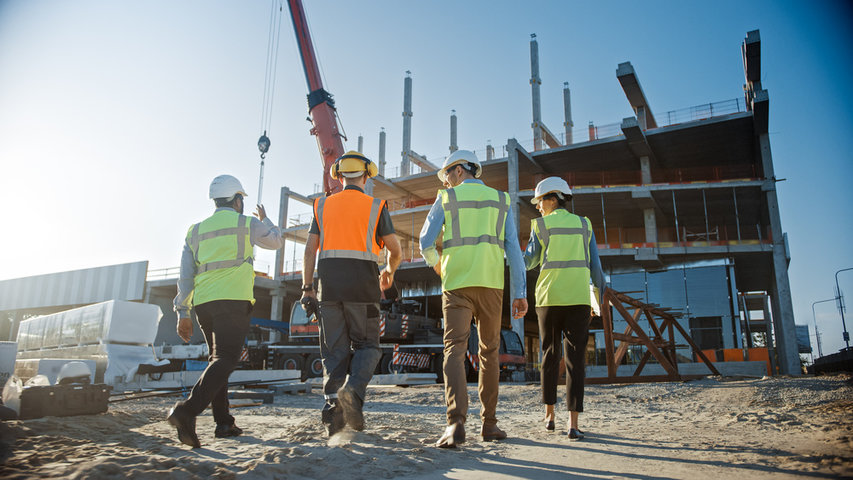
Modular construction is changing this approach. By manufacturing building components in controlled environments and transporting them to the mine site for rapid installation, mining companies can create functional, durable facilities while reducing construction time and on-site disruption.
What Is Modular Construction for Mining?
Modular construction involves producing building sections, or modules, off-site before transporting them to their final location. Depending on the project, modules can be delivered as complete rooms, structural units, or partially assembled building systems.
For mining operations, modular steel construction is particularly valuable because steel provides strength, durability, and flexibility. Steel-framed modules can be designed to withstand demanding environments while remaining relatively easy to transport, assemble, relocate, or expand.
A modular building can be used for a wide range of mining applications, including:
- Site offices and administration buildings
- Worker accommodation
- Meeting and training rooms
- Control rooms
- Canteens and dining facilities
- Medical and first-aid units
- Security buildings
- Storage facilities
- Changing rooms and ablution facilities
Why Modular Steel Construction Is Ideal for Mining
Remote mining sites present unique construction challenges. Extreme weather, limited road access, shortages of skilled labour, and high transportation costs can make conventional construction difficult.
Modular steel construction addresses many of these challenges by moving a significant portion of the construction process away from the mine site.
Faster Project Delivery
Modules can be manufactured while site preparation and foundations are being completed. This parallel approach can significantly reduce the overall project schedule compared with traditional construction.
Once the modules arrive, they can often be positioned and connected using cranes and specialist installation teams. This means mining companies can have operational facilities available sooner.
Reduced On-Site Labour
Remote locations can make it difficult and expensive to accommodate large construction crews. Factory-based manufacturing reduces the amount of work that needs to take place on site.
This can lower accommodation, catering, transport, and other costs associated with maintaining a large construction workforce in an isolated area.
Improved Quality Control
Manufacturing modules in a controlled facility allows construction teams to work under consistent conditions. Materials, workmanship, inspections, and quality-control processes can be managed throughout production.
This can help improve consistency and reduce the impact of weather-related delays and difficult site conditions.
The Role of Modular Office Pods
One increasingly useful solution for mining operations is the use of modular office pods. These compact, self-contained spaces can provide dedicated work areas without requiring a large permanent building.
Modular office pods can be configured as:
- Individual offices
- Supervisor workstations
- Meeting rooms
- Interview rooms
- Security offices
- Site management spaces
- Breakout and collaboration areas
Because they are manufactured off-site, office pods can be delivered ready for rapid installation. They can also be relocated or reconfigured as the needs of a mining operation change.
For exploration projects, temporary operations, and rapidly expanding sites, this flexibility can be especially valuable.
Designed for Harsh Mining Environments
A mining building needs to do more than provide shelter. It must be capable of performing reliably in demanding environments.
A well-designed modular building can incorporate insulation, ventilation, heating and cooling systems, durable finishes, fire protection, electrical systems, and other features suited to the specific site.
The modular approach also allows buildings to be designed around operational requirements rather than forcing mining companies to adapt their processes to a conventional building.
Flexible and Relocatable Buildings
Mining projects can have relatively short operational lifecycles, and site requirements can change as extraction areas develop. A permanent conventional building may therefore become unsuitable or redundant.
Modular buildings offer greater flexibility. Depending on their design, modules can be dismantled, transported, expanded, or repurposed for another location.
This creates an important advantage for mining companies seeking to maximise the long-term value of their infrastructure.
Lower Construction Disruption
Traditional construction can create significant activity around an operating mine, including deliveries, excavation, material storage, and large numbers of workers.
With modular construction, much of the manufacturing happens away from the active mining environment. Site activity can therefore be concentrated around foundations, module delivery, lifting, connections, and commissioning.
This can help reduce disruption to ongoing mining operations while improving site organisation and safety.
Sustainability Benefits
Modular construction can also support more sustainable building practices. Factory production can improve material efficiency and reduce waste compared with some conventional construction processes.
Furthermore, reusable and relocatable modules can extend the useful life of building components. Instead of demolishing a facility when a project changes, a modular building may be moved or adapted for another application.
For mining companies focused on reducing waste and improving resource efficiency, this can be an important consideration.
The Future of Remote Site Buildings
As mining operations become increasingly focused on efficiency, safety, flexibility, and cost control, modular construction is likely to play a growing role in remote infrastructure.
From modular office pods and accommodation units to complete modular building complexes, these solutions can provide mining companies with practical infrastructure that is faster to deploy and easier to adapt.
The combination of modular steel construction, off-site manufacturing, and flexible building design offers a compelling alternative to traditional construction for remote mining projects.
Conclusion
Remote mining sites require buildings that can be delivered quickly, perform reliably, and adapt to changing operational requirements. Modular construction provides a solution by shifting much of the construction process into a controlled manufacturing environment.
Whether the requirement is a small office pod, a temporary site facility, or a complete modular building complex, modular solutions can help mining companies reduce construction times, minimise site disruption, and create more flexible infrastructure.
As the mining industry continues to operate in increasingly remote and challenging locations, modular steel construction is well positioned to become a key part of the future of remote site buildings.