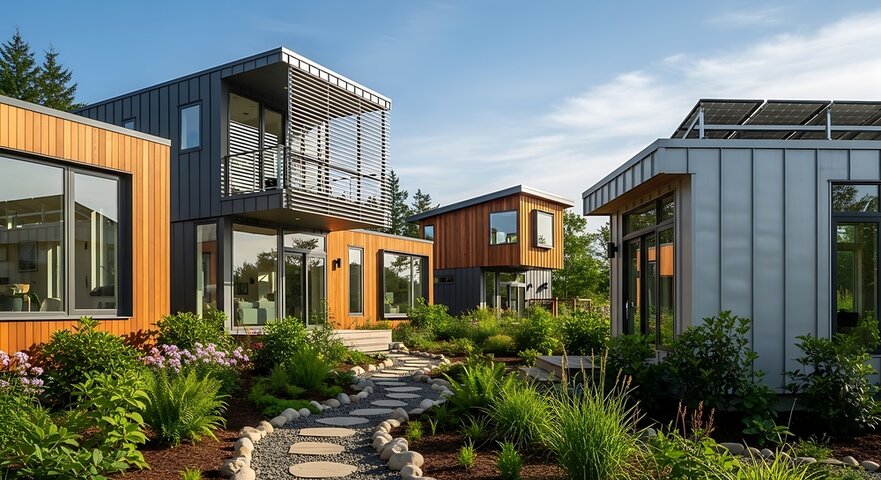
Modular building offers an innovative approach to modern living. By combining off-site manufacturing with efficient on-site installation, modular homes can provide flexible living spaces while offering opportunities for high-quality design and customisation.
From compact homes and family residences to additional living spaces and wellness areas, modular construction is becoming an increasingly interesting option for the future of housing.
What Is Modular Building?
Modular building is a construction method in which sections of a building are manufactured in a controlled factory environment before being transported to the final location.
These sections, known as modules, can contain structural elements, walls, flooring, windows, doors, electrical systems, plumbing, insulation, and interior finishes.
Once the modules arrive at the site, they are positioned and connected to create the completed building.
This approach can reduce the amount of construction work required on-site and can allow several stages of a project to progress at the same time.
Why Modular Building Is Changing Modern Living
Traditional homes are often designed around fixed layouts and long construction processes. Modular homes offer a different approach.
The modular concept allows homeowners and developers to think about living space in a more flexible way.
A home can be designed around current needs while also allowing for potential future changes.
For example, a homeowner might initially require a compact two-bedroom home but later need an additional bedroom, office, guest space, or recreational area.
Depending on the building system and site conditions, modular construction can make future changes and extensions easier to consider during the initial design stage.
Modular Steel Construction for Strong and Flexible Homes
One important technology within modern modular construction is modular steel construction.
Steel can provide a strong structural framework while allowing modules to be manufactured with a high degree of precision.
The strength and durability of steel make it suitable for a wide range of residential applications.
Modular steel construction can also support flexible interior layouts because structural components can be engineered to accommodate different room configurations.
For homeowners, this can mean greater freedom when planning bedrooms, kitchens, bathrooms, living areas, and home offices.
Faster Construction and Less Site Disruption
One of the key advantages of modular building is the potential for a faster construction process.
While modules are manufactured in a factory, groundwork and site preparation can take place at the same time.
Once the foundations and other site requirements are ready, the finished modules can be transported and installed.
This approach can reduce the amount of traditional construction activity taking place at the property.
For homeowners, this may mean less disruption, fewer deliveries of individual building materials, and a shorter period of intensive construction work on the site.
Flexible Homes for Changing Lifestyles
A modern home needs to adapt to the people living in it.
Families grow, children move out, people work from home, and lifestyles change over time.
Modular homes can be designed with flexibility in mind.
Open-plan living spaces can provide areas for cooking, dining, and relaxing, while separate rooms can be used as bedrooms, offices, or guest spaces.
Additional modular units can also potentially be used to create independent accommodation, home offices, studios, or hobby rooms.
This makes modular building particularly relevant to homeowners who want their property to evolve with their lifestyle.
Creating a Comfortable Modular Home
Comfort is just as important as construction efficiency.
A well-designed modular home can incorporate insulation, energy-efficient windows, ventilation, heating, cooling, acoustic solutions, and natural lighting.
The internal layout can also be designed to maximise available space.
Large windows can increase natural light, while carefully positioned rooms can create a sense of openness even in a compact home.
Modern interior finishes can further ensure that a modular home feels like a permanent and comfortable residence rather than a temporary structure.
Modular Homes and Energy Efficiency
Energy efficiency is an important part of modern residential design.
The factory-controlled production process used in modular building can help create consistent building components and allow insulation and other materials to be installed under controlled conditions.
Depending on the design, modular homes can incorporate:
- High-performance insulation
- Energy-efficient windows
- LED lighting
- Efficient heating systems
- Heat recovery ventilation
- Solar panels
- Smart home controls
- Energy-efficient appliances
Combining these technologies can help create a more comfortable home while potentially reducing energy consumption.
Sustainable Modular Living
Sustainability is another reason modular construction is attracting attention.
Factory production can provide greater control over materials and may help reduce waste compared with some traditional construction processes.
Modules can also potentially be designed for relocation, refurbishment, or reuse, depending on their construction and intended application.
For homeowners interested in sustainable living, modular construction can therefore be part of a broader approach to reducing the environmental impact of housing.
Adding Wellness to the Modern Home
Modern living is increasingly focused not only on the functionality of a home but also on health, relaxation, and wellbeing.
A modular home can incorporate dedicated wellness spaces such as exercise rooms, relaxation areas, outdoor living spaces, or private sauna facilities.
A sauna cube can be an interesting addition to a modern residential property, providing a dedicated wellness space without requiring a large extension to the main house.
Whether installed indoors, outdoors, beside a garden, or as part of a larger modular development, a sauna cube can complement the flexible design philosophy of modern modular living.
Modular Building for Small and Large Homes
Modular construction is not limited to one particular home size.
Compact modular homes can provide efficient living spaces for individuals, couples, or small families.
Larger modular developments can combine multiple units to create spacious family homes with several bedrooms, bathrooms, offices, and living areas.
The modular approach allows the size and configuration of a property to be considered according to the available land and the needs of the occupants.
Home Offices and Remote Working
Remote and hybrid working have changed how people use their homes.
A home office is now an important consideration for many households.
A modular home can incorporate a dedicated workspace from the beginning, rather than requiring an existing bedroom or living room to be converted into an office.
For homeowners who need additional space, a separate modular office can potentially be added to the property.
This provides a practical way to separate professional and personal activities while maintaining flexibility.
Guest Accommodation and Additional Living Space
Another application of modular building is additional accommodation.
A modular unit can potentially be used as:
- A guest bedroom
- A garden studio
- A home office
- A teenager's living space
- A hobby room
- A home gym
- A private retreat
- Independent accommodation
The exact possibilities depend on local planning regulations, building requirements, utilities, and the chosen modular system.
Designing for the Future
One of the most important benefits of modular thinking is the ability to plan for future requirements.
Rather than designing a home only around today's needs, homeowners can consider how the property might be used in five, ten, or twenty years.
For example, a flexible design could allow a room to change from a children's bedroom into a home office or guest room.
Additional modules could potentially provide new living or working areas as requirements change.
This long-term approach can make a modular home more adaptable throughout its lifecycle.
Modular Building and Modern Architecture
Modular construction does not have to look repetitive or industrial.
Contemporary modular homes can incorporate modern architectural features such as large glazed areas, clean lines, balconies, terraces, natural materials, and carefully designed landscaping.
The exterior can be customised to complement its surroundings and reflect the owner's personal preferences.
Modular steel construction can provide the structural framework for a variety of architectural styles while supporting efficient manufacturing.
Is Modular Building the Future of Housing?
The growing demand for flexible, efficient, and sustainable housing suggests that modular construction will continue to play an important role in the future of residential development.
Advances in manufacturing, digital design, materials, insulation, smart technology, and energy systems are creating new possibilities for modular homes.
The ability to manufacture buildings with greater precision and install them efficiently on-site makes modular building an attractive option for homeowners, developers, and investors.
Conclusion
Modular building is changing the way people think about modern housing.
By combining factory manufacturing, flexible design, and efficient on-site installation, modular homes can provide comfortable and adaptable living spaces for a wide range of lifestyles.
Modular steel construction can provide a strong and durable structural solution, while modern insulation, energy-efficient systems, and smart technology can support comfortable and sustainable living.
At the same time, lifestyle features such as a sauna cube can transform a modular property into a more complete wellness-focused home.
As lifestyles continue to evolve, the homes of the future will need to be flexible enough to evolve with them. Modular construction offers one way to create living spaces that can adapt, expand, and support modern life for years to come.