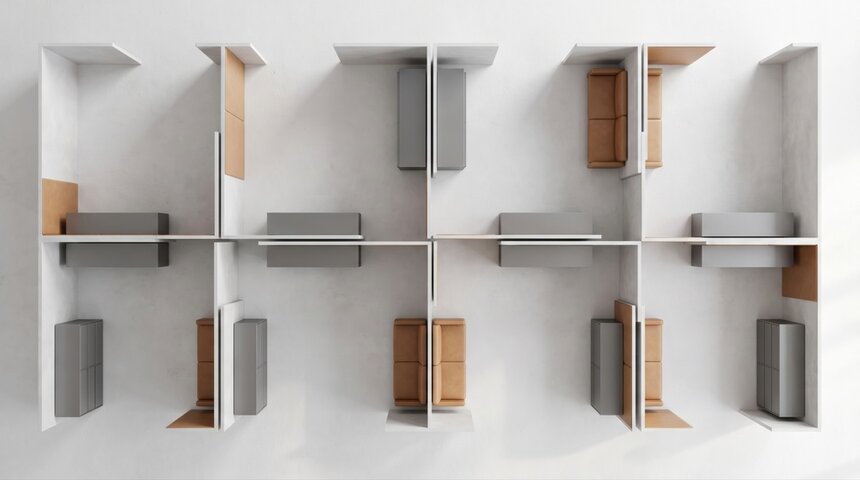
A modular building offers a flexible alternative that can help businesses expand without committing to a conventional building project. From a compact garden office to a professional office cabin, modular workspace solutions can be adapted to different business needs.
In this guide, we explore how modular offices support business growth, their main advantages, and what to consider when choosing the right workspace.
What Is a Modular Office?
A modular office is a workspace created using prefabricated building components or modules. These elements are typically manufactured off-site and then delivered for installation at the intended location.
Depending on the design, a modular building can accommodate individual offices, meeting rooms, reception areas, staff facilities, or multiple connected workspaces.
Common modular office solutions include:
- Standalone office cabins
- Garden offices for home-based businesses
- Portable and relocatable office units
- Multi-room modular office buildings
- Temporary or permanent commercial workspaces
The main advantage is flexibility. Businesses can choose a workspace that suits their immediate requirements while considering possible future expansion.
1. Expand Your Business Without Traditional Construction
When a company needs additional office space, extending an existing property or relocating to larger premises may not always be practical.
A modular building can provide extra working space with a more predictable manufacturing and installation process.
Because much of the structure is produced away from the installation site, on-site construction activity may be reduced compared with certain conventional building projects.
However, installation times still depend on site preparation, foundations, utilities, transport, and local approvals.
For growing businesses, a modular office can be a practical way to increase available workspace while continuing daily operations.
2. Create a Professional Workspace with an Office Cabin
An office cabin is a compact, self-contained workspace suitable for a variety of business applications.
Office cabins can be used as:
- Private offices for managers and employees
- Temporary workspaces during renovations
- On-site offices for construction projects
- Customer consultation rooms
- Meeting and administration spaces
- Additional offices for expanding businesses
A well-designed office cabin can include insulation, heating, lighting, electrical connections, ventilation, and data connectivity.
The specific features depend on the model, supplier, and intended use.
For businesses that need a dedicated working environment without renting additional commercial premises, an office cabin can be an attractive option.
3. Use a Garden Office for Flexible Working
A garden office is an increasingly practical solution for business owners, freelancers, remote workers, and small companies operating from residential properties.
Unlike a workspace inside the home, a garden office creates a separate area specifically designed for professional activities.
Benefits of a Garden Office
Better separation between work and home: A dedicated workspace can help establish clearer boundaries between professional and personal activities.
Reduced commuting: Working close to home can save travel time and associated expenses.
Flexible design: Garden offices can be configured with desks, shelving, storage, and technology.
Quiet working environment: A properly designed and insulated garden office may provide a comfortable setting for focused work.
Before installing a garden office, check local planning rules, property restrictions, access requirements, and any regulations relating to business use.
4. Control Workspace Expansion Costs
Budget planning is an important part of business growth.
A modular building can offer cost-planning advantages because many components are produced in a controlled manufacturing environment.
Businesses may be able to select standard layouts and specifications to manage their investment.
However, the total cost of a modular office extends beyond the purchase price.
Important expenses may include:
- Site preparation and foundations
- Delivery and installation
- Electrical and internet connections
- Heating, cooling, and ventilation
- Planning permissions and compliance
- Interior furnishings and equipment
- Ongoing maintenance
Comparing the complete installed cost helps businesses evaluate whether a modular office is more economical than leasing, relocating, or conventional construction.
5. Adapt Your Modular Office as Your Business Grows
One of the most useful features of a modular office is its potential for adaptability.
Depending on the building system, additional modules may be added to increase the available floor area.
For example, a business might begin with a single office cabin and later move to a larger modular building with several workspaces.
Potential expansion options include:
- Additional employee offices
- Dedicated meeting rooms
- Reception and visitor areas
- Break rooms and staff facilities
- Training and collaboration spaces
Not every modular system supports simple expansion or relocation. Businesses should confirm these capabilities with the supplier during the planning stage.
6. Create a Comfortable and Productive Working Environment
A modular office should provide more than additional floor space.
Employees need a comfortable environment with suitable lighting, temperature control, ventilation, and sufficient space for daily activities.
When comparing modular building designs, consider:
Insulation: Appropriate insulation can help maintain indoor comfort throughout the year.
Natural lighting: Well-positioned windows can create a more pleasant working environment.
Ventilation: Suitable ventilation supports indoor air quality.
Electrical infrastructure: Power outlets, lighting, and reliable connectivity are essential for most businesses.
Accessibility: Entrances, circulation space, and facilities should comply with applicable requirements.
Whether choosing a garden office or a larger office cabin, these features help create a functional working environment.
7. Modular Office Solutions for Different Businesses
Modular offices are suitable for many industries and business models.
Small Businesses and Startups
A compact office cabin can provide a dedicated professional workspace without requiring a large office lease.
Growing Companies
A modular building can add office space to an existing commercial site, subject to the necessary permissions and infrastructure.
Home-Based Professionals
A garden office can offer a separate workspace for consultants, designers, freelancers, and other remote professionals.
Construction and Industrial Businesses
Modular office cabins can accommodate project managers, administrative staff, and on-site meetings.
Retail and Service Businesses
Depending on local regulations, modular buildings may be used for customer consultation areas, administration, or additional business facilities.
8. How to Choose the Right Modular Office
Before investing in a modular building, evaluate the specific requirements of your business.
Define your purpose: Decide whether the space will serve as an office, meeting room, consultation area, or multi-purpose workspace.
Assess the available area: Measure the installation site and confirm delivery access.
Determine capacity: Consider the number of employees and the furniture and equipment required.
Review building specifications: Examine insulation, windows, ventilation, electrical installations, and structural performance.
Check approvals: Verify planning permission, building regulations, fire safety, accessibility, and any other applicable requirements.
Compare suppliers: Review warranties, delivery services, installation support, and available customisation options.
Choosing the right office cabin, garden office, or larger modular structure depends on how the space will be used today and in the future.
Conclusion: Grow Your Business with a Flexible Modular Office
Expanding a business does not always require moving to a larger property or undertaking a major construction project.
A modern modular building can provide additional workspace while offering flexibility in design and layout.
Whether you need a private garden office, a functional office cabin, or a larger modular office for multiple employees, selecting the right solution can help support your business operations and future growth.
By considering available space, budget, comfort, and regulatory requirements, you can invest in a workspace that meets your business needs.